Monthly or annual billing: which should you lead with?
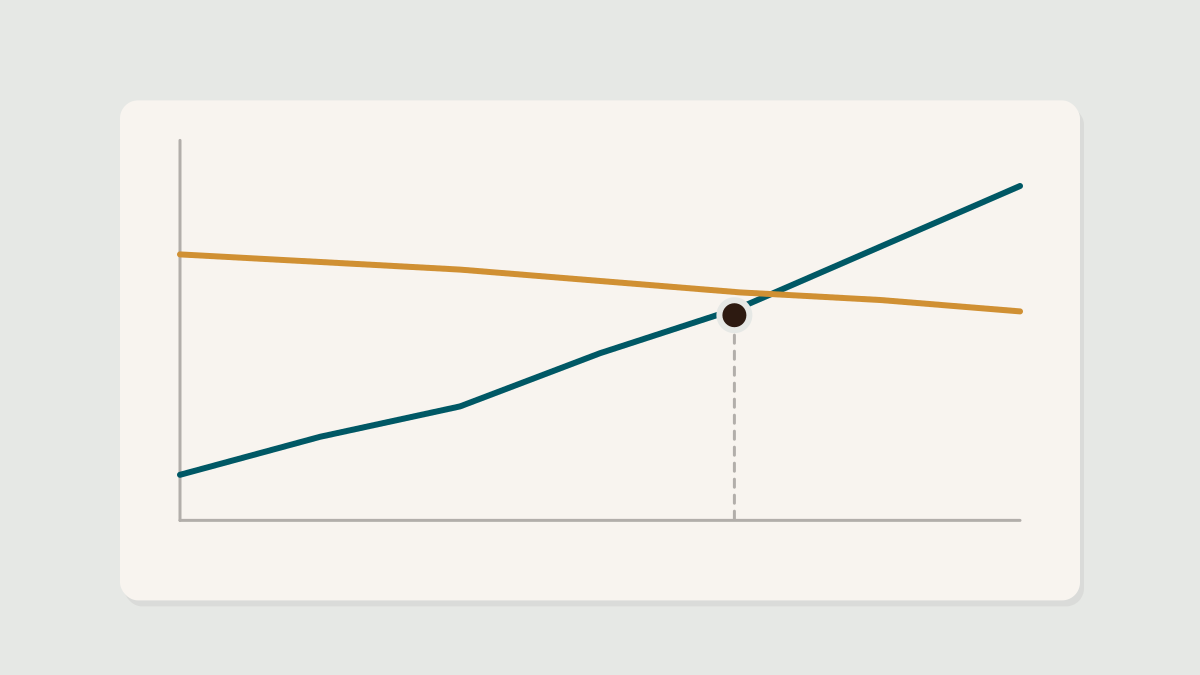
Most subscription products offer both, and most pricing pages have to choose which one to show first. The default matters because people tend to keep whatever is pre-selected. The best-known evidence is from retirement savings rather than pricing pages: a study of automatic 401(k) enrollment found participation rose sharply once joining became the default. Treat that as a reason to test your default, not as a prediction of your conversion rate. Here is how the two options compare from the customer’s side and the business’s.
| Monthly first | Annual first | |
|---|---|---|
| Barrier to first purchase | Low | Higher |
| Cash collected up front | One month | Twelve months |
| Measured churn | Visible every month | Deferred to renewal |
| Customer’s perceived risk | Low; easy to leave | Higher; needs trust |
| Best fit | New or unproven products | Established products with proven value |
The case for monthly
Pros
- Lowest commitment, so more first purchases
- Churn shows up quickly, which keeps the team honest
- Customers can upgrade to annual once they trust the product
Cons
- Higher churn in absolute terms
- Less predictable revenue
- More payment failures to recover
The case for annual
Pros
- Cash up front funds growth
- Customers who commit for a year tend to build the habit
- Fewer renewal moments where customers reconsider
Cons
- Scares off buyers who aren’t ready
- Hides dissatisfaction until the renewal date
- Refund requests are larger and more painful
How to choose
Lead with monthly when customers can’t yet judge the product’s value — early-stage products, new categories, self-serve buyers. Lead with annual when most customers already know what they are buying and you can show the saving plainly. In either case, show both, state the annual saving as a figure rather than a percentage, and offer an easy switch to annual after the first month or two. Whichever you lead with, make the renewal terms plain: a default that customers only discover when the charge lands is the kind of choice design the UK’s competition regulator examines in its review of defaults and online choice architecture, and a cancellation that is hard to find only delays the churn. If you are tempted to add a third plan purely to steer people, read what the decoy effect actually does first.
What to measure
Compare twelve-month revenue per visitor between the two defaults, not first-month conversion. Annual-first nearly always converts fewer visitors; the question is whether it earns more.
Twelve months is long enough to see the difference, but only if you read it by cohort. A retention curve for each default shows whether annual buyers are building a habit or are simply locked in. And the timing of the first payment request matters as much as its size, as one language app found when it moved its paywall.
How big should the annual discount be?
Should the toggle default to annual?
Keep reading
View all


For pitches, data you would like us to look at and letters to the editor, write to us any time. We read everything.
Free. One study, one teardown and one thing to test, every Tuesday morning. Nothing else.